TL;DR
If your RV AC blows warm air, cycles on and off rapidly, makes grinding or squealing noises, or can't keep up on days above 90 degrees, it probably needs professional attention. Most AC repairs cost between $150 and $1,500 depending on the problem. Cleaning filters and coils regularly prevents about 70% of the failures we see. Call a pro if the unit trips breakers, leaks refrigerant, or won't start at all.
Florida heat doesn't care about your travel plans. When your RV AC quits working in Jensen Beach during July, the inside of your rig can hit 120 degrees in under an hour. I've seen it happen more times than I can count over the past 10 years.
The good news? Most AC failures don't happen overnight. There are warning signs that show up days or even weeks before the unit completely gives out. If you catch them early, you're looking at a $150 to $350 repair instead of a $1,500 replacement. That's a pretty big difference.
Here's what I've learned after fixing over 3,200 RVs on the Treasure Coast. These are the signs you should watch for, what they usually mean, and when it makes sense to call someone like us instead of trying to fix it yourself.
Sign #1: Weak or Reduced Airflow
This is the most common complaint we hear. You turn on the AC and it's running, but the air coming out of the vents feels like it's barely moving. Have you noticed that the vents closest to the unit blow okay but the ones farther away barely produce anything?
According to the RV Dealers Association, airflow problems account for roughly 35% of all RV AC service calls. Here's what usually causes them:
- Dirty or clogged filters. This is the number one cause. RV AC filters need cleaning every 2 to 4 weeks during heavy use. Most owners go months without touching them.
- Blocked return air vents. Curtains, bedding, or stored items sitting over the ceiling return vent will choke the system fast.
- Dirty evaporator coil. Over time, dust and debris build up on the indoor coil, restricting airflow even when the filter is clean.
- Failing blower motor. If the motor is wearing out, it can't push air with the same force. You'll usually hear a change in the sound before the airflow drops noticeably.
- Duct leaks. If your RV uses ducted AC, cracks or disconnections in the ductwork can dump cold air into the ceiling cavity instead of through the vents.
Quick DIY check: pull the filter out and hold it up to a light. If you can't see through it, that's your problem. Clean it with warm soapy water, let it dry completely, and reinstall. About 40% of the "weak airflow" calls I get are solved by this alone.
Sign #2: AC Blows Warm or Room-Temperature Air
Your AC is running, the fan is blowing, but the air isn't cold. This is the one that panics people, especially when it's 95 degrees outside and climbing.
The compressor is the part that actually makes cold air. When it fails or can't start, the fan still blows but there's no cooling happening. Common causes include:
- Failed run or start capacitor. Capacitors store the electrical charge needed to start and keep the compressor running. They're one of the most common failure points in RV AC units, and they're cheap to replace (usually $20 to $50 for the part).
- Low refrigerant. If there's a leak in the sealed system, refrigerant levels drop and cooling efficiency tanks. A unit that's 10% low on refrigerant loses about 20% of its cooling capacity.
- Compressor failure. This is the expensive one. Compressor replacements typically run $800 to $1,500 with labor.
- Thermostat malfunction. Sometimes the thermostat isn't reading the temperature correctly and doesn't signal the compressor to kick on.
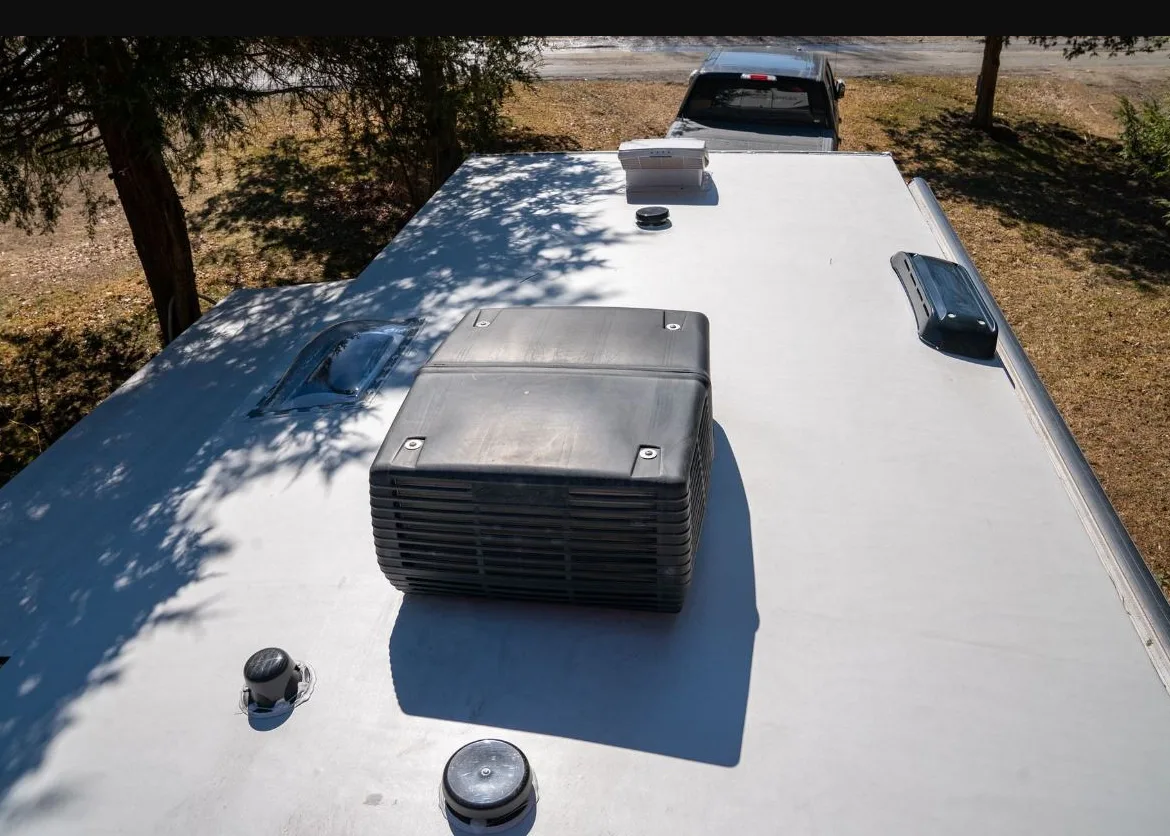
Here's a test you can do: put your hand on the top of the rooftop unit (carefully, from a ladder). If the compressor is running, you'll feel heat being exhausted out the sides. If the fan is spinning but nothing feels warm up there, the compressor likely isn't engaging.
Sign #3: Strange Noises from the Unit
RV AC units aren't silent, but you get used to the normal hum. When that hum changes to something else, pay attention. Different noises point to different problems:
- Buzzing or humming without the compressor starting. Usually a bad capacitor or a locked-up compressor. The unit is trying to start but can't.
- Grinding or scraping. Fan blade hitting something, worn bearings in the blower motor, or debris inside the unit.
- Squealing or screeching. Belt issues (in units that have them) or bearing failure in the fan motor.
- Clicking on and off rapidly. This is called short cycling. It usually means the unit is overheating, the capacitor is failing, or there's an electrical issue.
- Rattling. Loose mounting hardware, a shroud that's come loose, or internal components vibrating.
Don't ignore these. A $30 capacitor replacement can prevent a $1,500 compressor failure if you catch it early. According to a 2024 report from the RV Industry Association, about 60% of major AC compressor failures were preceded by unusual noises that went unreported for 2 weeks or more.
Sign #4: The Unit Trips Breakers or Blows Fuses
If your AC trips the breaker every time it tries to start, or it runs for a few minutes and then trips, you've got an electrical problem that needs professional attention. This isn't a DIY situation.
Common causes include:
- Compressor drawing too many amps. A failing compressor pulls more current than normal, which trips the breaker. This usually means the compressor is on its way out.
- Wiring issues. Corroded connections, loose terminals, or undersized wiring can cause intermittent tripping.
- Weak shore power. Some campgrounds (especially older ones around Jensen Beach and Stuart) have shore power that sags below 105 volts under load. Your AC needs at least 108 volts to run properly.
- Bad breaker. Breakers wear out over time. A 15-year-old breaker might trip at lower amperage than it should.
Running your AC on low voltage is one of the worst things you can do. According to Dometic (one of the largest RV AC manufacturers), operating below 105 volts can reduce compressor life by up to 50%. If you're at a campground and noticing voltage issues, a portable voltage monitor is worth every penny. They run about $25 to $40.
Sign #5: Ice Forming on the Unit or Coils
Finding ice on your RV AC might seem like it means the unit is cooling too much. It actually means the opposite. Ice formation is a sign that something is very wrong with airflow or refrigerant levels.
- Restricted airflow. When air can't flow over the evaporator coil fast enough, the coil temperature drops below freezing and moisture in the air freezes on it. Dirty filters are the usual suspect.
- Low refrigerant. When refrigerant is low, the pressure drops and the coil gets colder than it should. This causes ice buildup, which further restricts airflow, creating a cycle that gets worse quickly.
- Fan motor running slow. A failing fan motor can't move enough air across the coil.
If you see ice, turn the AC off immediately and let it thaw completely before running it again. Running an iced-up unit can damage the compressor. Once it's thawed, check the filter first. If the filter is clean and it ices up again, you need a technician.
When DIY Makes Sense (and When It Doesn't)
I'm not the kind of repair guy who says you need a professional for everything. Some AC maintenance you can and should do yourself:
Good DIY tasks:
- Cleaning or replacing AC filters (every 2 to 4 weeks during use)
- Cleaning the condenser coil on the rooftop unit (twice a year)
- Inspecting the shroud for cracks or damage
- Checking that the gasket between the unit and the roof is sealed
- Making sure return air vents aren't blocked
Call a professional for:
- Anything involving refrigerant (it's regulated and requires certification to handle)
- Compressor issues
- Electrical problems, especially breaker tripping
- Capacitor replacement (involves stored electrical charge that can shock you)
- Any repair that requires removing the rooftop unit
Are you comfortable working on a ladder and handling basic tools? Then filter cleaning and coil maintenance are well within your reach. But once you're dealing with electrical components or refrigerant, the risk of injury or making the problem worse goes up fast.
What Does RV AC Repair Actually Cost?
I know cost is the first thing on everyone's mind, so here's a realistic breakdown based on what we charge and what I see across the industry in the Jensen Beach and Treasure Coast area:
- Diagnostic fee: $95 to $150. This covers showing up, identifying the problem, and giving you a written estimate.
- Capacitor replacement: $150 to $300 (including the diagnostic). This is one of the most common and affordable AC repairs.
- Thermostat replacement: $150 to $350.
- Fan motor replacement: $250 to $500.
- Compressor replacement: $800 to $1,500.
- Full rooftop unit replacement: $1,200 to $2,500, depending on the brand and BTU rating.
These prices include labor. Parts vary by manufacturer. A Coleman-Mach unit will have different pricing than a Dometic or Advent. We always provide a written estimate before starting any work, so you know exactly what you're looking at before we touch anything.
How to Prevent Most RV AC Problems
After 10 years and 3,200+ repairs, I can tell you that regular maintenance prevents the majority of AC failures we see. Here's a simple schedule that works:
- Every 2 to 4 weeks (during use): Clean or replace the return air filter.
- Twice a year: Clean the condenser coil on the roof. Use a garden hose and a soft brush. Don't use a pressure washer.
- Once a year: Have a technician inspect the electrical connections, capacitor, and refrigerant levels. This is especially important in Florida, where units run nearly year-round.
- Every 3 years: Inspect and replace the roof gasket if it's cracking or pulling away.
A $150 annual service call can easily save you $1,000+ in emergency repairs. That's not a sales pitch. It's just what the numbers show after a decade of doing this work.
Need your RV AC checked? We offer same-day service across Jensen Beach, Stuart, Palm City, and the surrounding area. Call 772-356-0328 or book online. We'll give you an honest diagnosis and a fair price.