TL;DR
The five biggest slide-out warning signs are slow movement, grinding or squealing noises, water leaking past the seals, uneven extension (one side moving faster than the other), and the motor running but the slide not moving. Most problems start small and get expensive fast. A $15 can of slide lubricant used every 3 months prevents the majority of mechanical issues. Seal replacements run $200 to $500. Motor replacements cost $400 to $1,200. Catching problems early saves you 50% to 70% on repair costs.
Slide-outs are one of the best features on modern RVs. They can add 50 to 100 square feet of living space to your rig with the push of a button. But they're also one of the most mechanically complex systems on your RV, and when they fail, the repair bills add up quickly.
Over the past 10 years, I've repaired slide-outs on everything from 15-foot travel trailers with a single bedroom slide to 45-foot Class A motorhomes with four slides. The problems are usually the same regardless of the RV's size or price. And almost every expensive slide-out repair I've done started with a warning sign that the owner ignored or didn't recognize.
Here are the five warning signs I see most often, what causes them, and what you should do about each one.
Warning Sign #1: Slow or Sluggish Movement
Your slide-out used to extend and retract in 15 to 20 seconds. Now it takes 30, 40, or even 60 seconds. Maybe it hesitates partway through, or it seems to struggle like it's pushing against something. This is the most common early warning sign, and it's the one owners most often dismiss.
"It's just getting old." I hear that a lot. But slide-outs don't slow down because of age. They slow down because something is wrong, and that something is getting worse every time you operate the slide.
What causes slow movement:
- Dirty or dry slide rails. The rails that your slide-out travels on need regular lubrication. Without it, friction increases, the motor works harder, and movement slows down. This is the most common cause and the easiest to fix.
- Low hydraulic fluid. Hydraulic slide-out systems depend on fluid pressure. When fluid is low (from a slow leak or evaporation over time), the system loses power. Low fluid also lets air into the lines, which causes jerky movement.
- Weak battery voltage. Electric slide-out motors draw significant current (25 to 40 amps, depending on the size). If your house batteries are weak or partially discharged, the motor doesn't get the power it needs. According to RVIA technical bulletins, low voltage is involved in approximately 20% of slide-out performance complaints.
- Worn motor. Electric motors wear out over time. Brush wear, commutator damage, and bearing deterioration all reduce motor output gradually.
- Debris in the mechanism. Leaves, dirt, and small objects can get caught in the gears or tracks. Here in Jensen Beach, we've pulled out everything from sand to tree frogs from slide-out mechanisms.
What to do: Start with the easy stuff. Clean the slide rails and apply a dry slide-out lubricant (not WD-40, not grease). Check your battery voltage (should be 12.6 volts or higher when fully charged). If the slide is hydraulic, check the fluid reservoir. If none of that helps, it's time for a technician to look at the motor and mechanism.
Warning Sign #2: Grinding, Squealing, or Unusual Noises
A healthy slide-out is relatively quiet. You'll hear the motor hum and maybe a light mechanical sound as it moves. If you're hearing grinding, squealing, popping, or clicking, something mechanical is failing.
Here's what different noises usually mean:
- Grinding. Metal-on-metal contact. This usually means worn gears, a dry gear rack, or misalignment causing components to rub. If you ignore grinding, you'll eventually strip the gears completely, turning a $200 repair into a $1,200 one.
- Squealing or screeching. Dry bearings, a struggling motor, or dry slide rails. The squeal is telling you that lubrication has failed somewhere in the system.
- Popping or clicking. Worn gear teeth catching or skipping. This can also indicate a cracked or broken tooth on the gear rack. Each time it pops, it's putting stress on the adjacent teeth.
- Loud humming without movement. The motor is running but the slide isn't moving (or barely moving). This means the motor is working against a jam, or the connection between the motor and the mechanism has failed.
Don't operate a slide-out that's making unusual noises repeatedly. Every cycle with a mechanical problem makes the damage worse. One or two cycles to diagnose the issue is fine, but don't keep running it back and forth hoping the noise goes away.
Have you noticed any new sounds from your slide-out recently? Even subtle changes in the normal operating sound can be early indicators of wear.
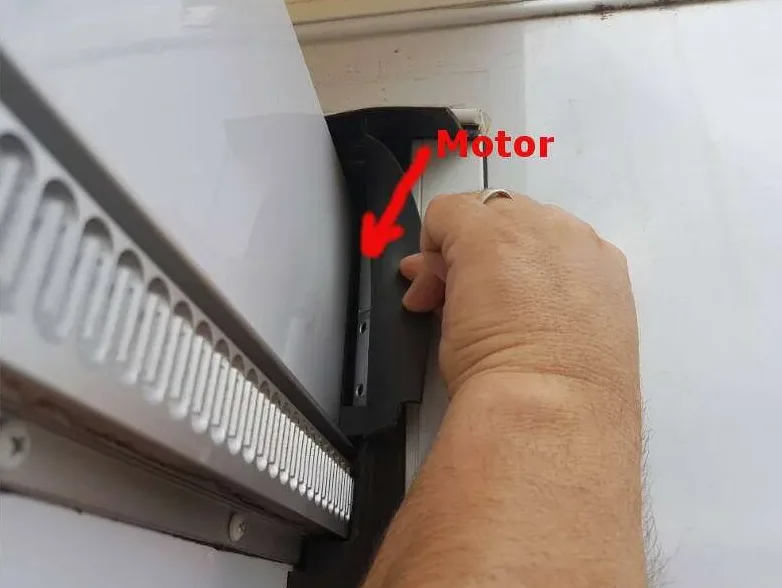
Warning Sign #3: Water Leaking Past the Seals
Slide-out seals (also called wiper seals or bulb seals) are the rubber gaskets that run around the perimeter of your slide-out opening. They're designed to keep rain, wind, and bugs out when the slide is extended. When they fail, water gets inside your RV.
This is a particularly big deal in Florida. We get 55+ inches of rain per year, much of it falling in heavy, wind-driven downpours during summer. A small gap in your slide-out seal during a thunderstorm can let in a surprising amount of water in just minutes.
Signs your slide-out seals are failing:
- Water stains on the floor or carpet near the slide-out edges
- Musty smell inside the RV, especially near the slide
- Visible gaps or daylight between the seal and the slide-out wall
- Seals that are cracked, hardened, or flattened (they should be soft and springy)
- Water dripping from the bottom edge of the slide-out after rain
What destroys slide-out seals in Florida:
- UV radiation. Florida sun breaks down rubber faster than almost any other environmental factor. Seals that last 8 to 10 years up north might only last 5 to 7 here.
- Slide-out misalignment. When the slide extends or retracts unevenly, it puts uneven pressure on the seals. Some sections get compressed too hard (causing them to flatten permanently), while other sections lose contact (creating gaps).
- Dirt and debris. Sand, pine needles, and other debris that gets trapped against the seals acts like sandpaper every time the slide moves, wearing down the rubber surface.
Seal replacement is one of the most cost-effective RV repairs you can make. A full set of slide-out seals costs $200 to $500, depending on the size of the slide and the type of seal. Compare that to the $2,000 to $8,000 it costs to repair water damage to flooring, walls, and framing that a failed seal causes. I've seen water damage from a single leaking slide-out seal total over $6,000 in repair costs because the owner didn't notice it for several months.
Warning Sign #4: Uneven Extension or Retraction
When you operate your slide, watch it carefully. Both sides should move at the same speed and the slide should extend parallel to the floor. If one side leads the other, or the slide tilts as it moves, you've got an alignment or mechanical problem.
What causes uneven movement:
- One motor or ram is weaker than the other. Most larger slide-outs have two motors or two hydraulic rams (one on each side). If one is failing, that side moves slower, causing the slide to rack (twist slightly as it moves).
- Bent or damaged slide rails. If one rail is bent from impact, overloading, or normal wear, it creates more resistance on that side.
- Unequal gear wear. In gear-driven systems, if the gears on one side are more worn than the other, the slide extends unevenly.
- Control board issues. Some newer RVs use electronic controllers that synchronize the two sides. If the controller or its sensors malfunction, synchronization is lost.
Uneven movement is more than just an annoyance. It puts extreme stress on the slide-out frame, the wall opening, and the seals. Every cycle with a racking slide-out causes cumulative damage that makes the problem worse. It can also lead to structural damage where the slide-out connects to the RV's frame, and those repairs get expensive (often $2,000 to $5,000 or more).
If you notice your slide is moving unevenly, stop using it and call a technician. Continuing to operate an out-of-alignment slide-out is one of the fastest ways to turn a $400 repair into a $3,000 one.
Warning Sign #5: Motor Runs but Slide Won't Move
You press the button, you hear the motor running, but the slide-out doesn't budge. Or it moves an inch and stops while the motor keeps humming. This means the motor is working but the mechanical connection between the motor and the slide has failed.
Common causes:
- Stripped gears. The teeth on the drive gear or the gear rack have worn down to the point where they can't engage properly. The gear spins but nothing moves. This is the end result of ignoring grinding noises (Warning Sign #2) for too long.
- Broken shear pin or coupling. Some systems use a shear pin that's designed to break under excessive load to protect the motor and mechanism. If the shear pin breaks, the motor spins freely.
- Hydraulic system failure. In hydraulic systems, a failed pump, blown seal in the cylinder, or a major fluid leak can prevent the slide from moving even though the motor is running the pump.
- Broken drive shaft or coupler. The connection between the motor and the gear or ram can break, leaving the motor spinning without driving anything.
If you're stuck with a slide that won't retract, check your owner's manual for the manual override location. Most slide-outs have one. It's usually a crank socket or Allen bolt on the motor housing or inside an access panel. Manual retraction is slow work (10 to 20 minutes of cranking), but it'll get the slide in safely so you can travel to get it repaired.
Don't try to force a stuck slide-out by pressing the button harder or longer. If the motor is running and the slide isn't moving, continued operation can burn out the motor, overheat the hydraulic system, or cause additional mechanical damage.
Slide-Out Maintenance That Prevents Most Problems
I'd estimate that 60% to 70% of the slide-out repairs I do could have been prevented with basic maintenance. Here's the simple routine I recommend:
Every 3 months (or before and after trips):
- Clean the slide rails with a rag to remove dirt and debris
- Apply a dry slide-out lubricant to the rails and mechanism (products like Slide-Out Dry Lube or Protect All Slide-Out Dry Lube work well)
- Inspect the seals for cracks, hardening, or gaps
- Wipe the seals with a rubber protectant (303 Aerospace Protectant is popular for this)
Every 6 months:
- Check hydraulic fluid level (if applicable)
- Inspect the gear rack and drive gears for wear
- Check all mounting bolts and brackets for tightness
- Test the manual override to make sure it works
Once a year:
- Have a technician inspect the full mechanism, motor, and alignment
- Check battery condition and voltage under load
- Inspect the floor and walls around the slide-out opening for any signs of water intrusion
This routine takes about 20 minutes per quarter for the basic maintenance and about an hour for the annual inspection. The lubricant costs $10 to $15 per can and lasts several applications. Compare that to the $400 to $3,500 cost range for slide-out repairs, and the math is pretty clear.
What Slide-Out Repairs Actually Cost
Here's a realistic cost breakdown for common slide-out repairs in the Jensen Beach and Treasure Coast area:
- Lubrication and adjustment: $95 to $200. Basic service call to clean, lubricate, and adjust the slide mechanism.
- Seal replacement: $200 to $500. Depends on the size of the slide and the type of seal material.
- Motor replacement: $400 to $1,200. Varies by motor type and accessibility.
- Hydraulic ram/cylinder replacement: $600 to $1,500. Includes fluid, seals, and the ram itself.
- Gear rack or drive gear replacement: $500 to $1,200. Parts plus the labor to remove and reinstall.
- Full mechanism overhaul: $1,500 to $3,500. For slide-outs that have multiple worn components.
- Alignment and structural repair: $800 to $2,500. For slides that have been operating out of alignment.
The pattern here is consistent with every other RV system: catching problems early costs a fraction of what waiting costs. A $95 lubrication service prevents a $500 gear replacement. A $300 seal replacement prevents a $5,000 water damage repair. Is your slide-out due for a check-up?
If you're noticing any of these warning signs with your slide-out, or if it's been more than a year since the mechanism was inspected, give us a call at 772-356-0328. We come to your location across Jensen Beach, Stuart, Palm City, and the surrounding area. We'll inspect the system, tell you honestly what we find, and give you a written estimate before any work starts.