- Annual AC tune-up: coil cleaning, refrigerant check, electrical inspection, and more
- Typical cost: $150 to $350 depending on what's needed
- Catches small problems before they become expensive breakdowns
- Best scheduled in late winter or early spring before peak cooling season
- Call 772-356-0328 to schedule your tune-up
Why AC Maintenance Matters in Florida
I'll be straight with you: most of the expensive AC repairs I do could have been prevented with basic annual maintenance. I'm not saying that to sell you a tune-up. I'm saying it because I've seen the pattern play out hundreds of times over 10 years and 3,200+ repairs in Martin County.
Here's how it usually goes. An RV owner in Jensen Beach runs their AC from March through November without any maintenance. The coils get dirty, reducing efficiency. The refrigerant slowly drops. The capacitor weakens. The unit works harder and harder to maintain temperature, and then one hot afternoon in August, the compressor gives out. That's a $800 to $1,200 repair that started as a $200 preventive visit.
Florida is uniquely tough on RV AC systems. The combination of high heat, extreme humidity, salt air (especially this close to the coast in Jensen Beach), and near-constant operation means your AC wears out faster here than almost anywhere else in the country. What works as a "skip a year" approach up north doesn't work down here. Your AC needs annual attention to keep running reliably.
What's Included in a Tune-Up
When I show up for a maintenance visit, I go through every part of your AC system in a specific order. Here's exactly what you're getting.
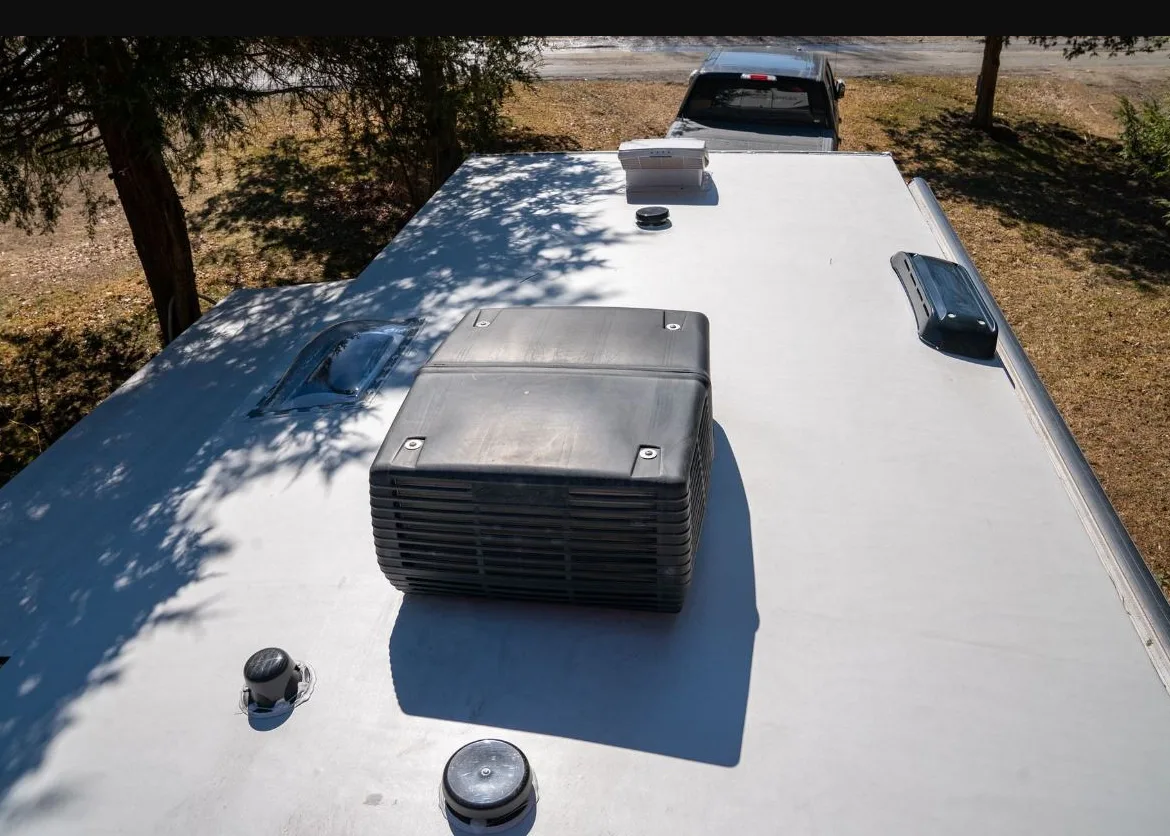
Condenser coil cleaning. The condenser coils sit on top of your roof, exposed to everything. Dirt, leaves, road grime, pollen, and salt all build up on the coil fins over time. Dirty coils can't transfer heat efficiently, which means your AC works harder, uses more energy, and cools less effectively. I clean the coils thoroughly, straighten any bent fins, and remove any debris from the coil area.
Evaporator coil inspection. The evaporator coils are inside the ceiling assembly. While they're somewhat protected from outdoor elements, they can still collect dust, pet hair, and mold (mold loves Florida's humidity). I inspect and clean these coils to ensure good airflow and heat transfer.
Air filter check and replacement. A clogged air filter is the simplest, cheapest maintenance item, and it's also the one most people neglect. A dirty filter restricts airflow, forces the AC to work harder, and can cause the evaporator to ice up. I check the filter condition and replace it if needed.
Refrigerant pressure test. I check both the high-side and low-side pressures to make sure the refrigerant charge is correct. Low refrigerant means there's a leak somewhere, and I'll locate it if one exists. Overcharged systems (from someone adding refrigerant without measuring) are just as problematic as undercharged ones.
Electrical inspection. I test the compressor amperage draw, capacitor values, contactor condition, and all wiring connections. Electrical problems are the second most common cause of AC failure, and they're almost always detectable before they cause a breakdown.
Thermostat calibration check. I verify that your thermostat is reading temperature accurately and sending the right signals to the AC unit. A thermostat that's off by even 3 degrees makes a noticeable difference in comfort and energy use.
Drain pan and drain line cleaning. I clear the condensate drain pan and line of any algae, debris, or buildup. In Florida's humidity, a clogged drain can cause water to back up and leak into your ceiling within days.
Gasket inspection. I check the rooftop gasket for cracks, compression loss, and deterioration. If it needs replacing, I'll do it during the same visit.
Full system performance test. After everything else is done, I run the AC through a complete cycle and measure the temperature difference between the return air and the supply air. A healthy system should produce a 18 to 22 degree temperature split. If it doesn't, something else needs attention.
When Should You Schedule a Tune-Up?
The best time for AC maintenance in Florida is late February through early April. You want the system inspected and serviced before the heavy cooling season starts. Finding a problem in March gives you time to order parts and schedule the repair before you actually need the AC running full blast.
That said, any time is better than never. If it's the middle of summer and you haven't had a tune-up in two years, call me. I'd rather maintain your system mid-season than have you calling me for an emergency breakdown in August.
Are you planning a long road trip? A pre-trip tune-up is one of the best investments you can make. Finding a qualified RV AC technician on the road can be difficult, and shop rates at unfamiliar locations are often higher. Having your system checked and serviced at home, where I know the system and have the parts, saves you money and stress.
How Often Should You Service Your RV AC?
For RVs based in Jensen Beach and the surrounding area, I recommend annual maintenance at minimum. If you're a full-timer who runs the AC nearly every day, twice a year (spring and fall) is even better.
Here's a rough guideline based on how much you use your RV:
Weekenders and occasional travelers: Once a year, in early spring. Your AC doesn't get as much use, but it still sits on the roof collecting dirt and dealing with Florida's humidity year-round.
Seasonal residents (snowbirds): Once a year before your season starts. If you arrive in October and leave in April, schedule the tune-up for September or early October.
Full-timers: Twice a year. Once in spring before peak heat, and once in fall. Your AC runs almost constantly, and it needs more frequent attention to stay reliable.
What Happens If You Skip Maintenance?
Nothing bad happens immediately, which is exactly why people skip it. But the problems are building up quietly in the background.
Dirty coils reduce cooling efficiency by 20 to 30 percent over a season. That means your AC runs longer to achieve the same temperature, which uses more energy and puts more wear on every component.
Low refrigerant (even a small leak) forces the compressor to work harder. Over time, this elevated stress burns out compressor windings. A slow leak that costs $150 to find and fix today becomes a $1,000 compressor replacement next year.
A weak capacitor that tests at 80% of its rated value might run fine today. But it's declining, and in the peak of summer when the compressor is working its hardest, it'll fail. Capacitors cost $15 to $40. Emergency service calls for a failed capacitor cost $200+ because now you're paying for diagnosis time too.
The math always favors prevention. A $200 annual tune-up is the cheapest AC expense you'll have all year, and it protects you from the most expensive ones.
Ready to Schedule Your Tune-Up?
Don't wait until something breaks. Call me at 772-356-0328 and we'll set up a time that works for your schedule. Maintenance visits typically take 1 to 2 hours, and I come to your location. You don't need to move your RV anywhere.
If it's been more than a year since your last service (or if you've never had one), now is a great time to start. Your AC will run better, last longer, and you'll avoid those surprise breakdowns that always seem to happen at the worst possible moment.