RV Generator Fuel System Service
Clogged carburetors, stale fuel, cracked lines. We'll get your generator's fuel system flowing clean again.
Fuel system problems are the number one reason RV generators won't start or run rough. Stale gas, clogged carburetors, dirty fuel filters, and cracked lines are all fixable on-site. Service starts at $85 for a basic fuel filter swap, $175 to $325 for carburetor cleaning, and $200 to $400 for diesel injector work. Call 772-356-0328 to get your generator running right.
The fuel system: where most generator problems start
If you ask any experienced RV technician what causes the most generator trouble, the answer is almost always the fuel system. Scott Marlins has been fixing RV generators across Jensen Beach and Martin County for over 10 years, and he'll tell you that roughly 7 out of 10 generator problems trace back to fuel. The reasons aren't complicated, but they're worth understanding.
RV generators have a unique problem that cars and trucks don't: they sit. A lot. Most RVs aren't driven daily. The generator might run for a weekend trip, then sit for weeks or months before the next use. During that downtime, gasoline breaks down. In Florida's heat (where fuel storage temperatures can easily reach 100+ degrees inside an RV's compartment), that breakdown happens faster than anywhere else in the country.
What happens when fuel goes bad
Modern gasoline contains up to 10% ethanol (E10), and ethanol is hygroscopic, meaning it absorbs moisture from the air. In Jensen Beach's humid environment, that moisture absorption is accelerated. Within 30 to 60 days, the fuel starts to separate. The ethanol and water sink to the bottom of the tank while the gasoline floats on top. That water-ethanol mix corrodes fuel system components and clogs passages.
At the same time, the volatile compounds in gasoline start evaporating, leaving behind a sticky varnish. This varnish coats the inside of fuel lines, clogs carburetor jets (some of which have openings as small as 0.028 inches), and gums up needle valves. The result: your generator cranks but won't fire, or it fires but surges, sputters, and dies.
Scott sees this pattern constantly. An RV owner heads north for the summer, comes back to Jensen Beach in October, and the generator that worked perfectly in March won't start. The culprit is almost always stale fuel and a varnished carburetor.
What's included in a fuel system service
The scope of work depends on what's wrong, but here's everything we can address during a fuel system service:
- Fuel filter replacement (the first line of defense against contaminated fuel)
- Fuel line inspection for cracks, soft spots, and loose connections
- Fuel line replacement if deterioration is found
- Carburetor removal, disassembly, and ultrasonic cleaning (gas generators)
- Carburetor jet and passage cleaning with calibrated wire gauges
- Needle valve and float inspection and replacement if needed
- Fuel pump pressure and volume testing
- Fuel pickup tube and anti-siphon valve inspection
- Fuel injector cleaning and flow testing (diesel generators)
- Water separator service (diesel generators)
- Fuel tank inspection for sediment and water contamination
Carburetor cleaning: the most common fuel system repair
About 60% of our generator fuel system service calls involve carburetor cleaning. Here's how Scott handles it. He removes the carburetor from the generator, disassembles it completely, and soaks all metal parts in an ultrasonic cleaner. This dissolves the varnish that chemical spray alone can't reach. Every jet, passage, and orifice gets individually verified with calibrated wire gauges to confirm it's clear. Rubber components (gaskets, O-rings, needle valve seat) get replaced with new parts. The float height gets checked and adjusted. Then everything goes back together, gets reinstalled, and the generator gets a test run under load.
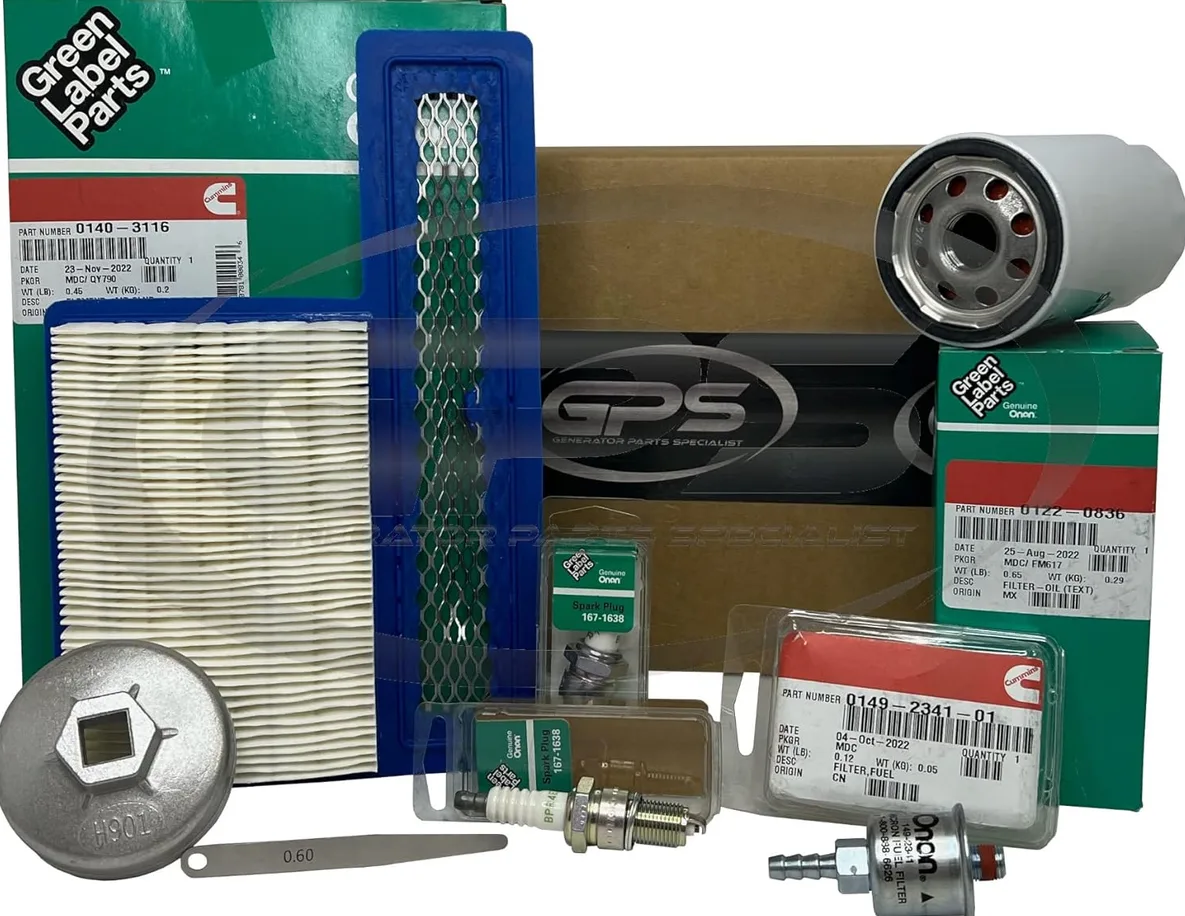
The whole process takes 90 minutes to 2 hours on-site. It costs $175 to $325 depending on the carburetor complexity and parts needed. Some generators (like certain Onan models) have carburetors with known wear points that we always address during a cleaning to prevent repeat issues.
Fuel line problems in Florida
Rubber fuel lines deteriorate over time, and Florida's heat speeds up the process significantly. UV exposure (even indirect), ozone, and ethanol all attack rubber compounds. When fuel lines start to fail, they can crack on the outside (causing visible leaks) or deteriorate on the inside (shedding rubber particles into the fuel stream). Both scenarios are bad. External leaks are a fire hazard, and internal deterioration sends debris downstream into the carburetor or injectors.
During a fuel system service, Scott checks every inch of fuel line from the tank to the generator. If any section shows cracking, swelling, or softening, it gets replaced with ethanol-compatible fuel line rated for the correct pressure. This isn't a place to cut corners. A $15 fuel line replacement prevents a potential fire or a repeat carburetor clog.
Diesel generator fuel systems
Diesel generators have their own set of fuel system challenges. They don't have carburetors, but they do have fuel injectors that can clog, water separators that need servicing, and fuel filters that are even more critical than on gas units. Diesel fuel can also develop algae and microbial growth in warm, humid conditions (Florida is notorious for this). If you've ever heard of "diesel bug," that's what it is: bacteria and fungi that thrive in the water layer at the bottom of diesel tanks.
For diesel generators, our fuel system service includes draining the water separator, replacing the fuel filter element, testing fuel pressure, inspecting injector spray patterns, and treating the fuel with biocide if microbial contamination is present. Diesel fuel system work typically runs $200 to $400.
Preventing fuel problems before they start
The best fuel system service is the one you never need because you prevented the problem. Here are practical steps that actually work:
- Add fuel stabilizer (like Sta-Bil or Star Tron) to fresh fuel before storage periods longer than 2 weeks
- Run the generator for 10 minutes after adding stabilizer so it circulates through the entire system
- Run your generator under load for at least 30 minutes every 2 to 4 weeks, even if you're not using the RV
- Keep your fuel tank as full as practical to reduce the air space where condensation forms
- Use ethanol-free fuel (available at some marinas and stations) if you can find it locally
- Replace fuel filters on the manufacturer's recommended schedule, typically every 250 to 500 hours
These steps cost almost nothing and dramatically reduce the chances of a fuel-related breakdown. Scott tells every customer the same thing: $8 worth of fuel stabilizer beats a $200 carburetor cleaning every time.
Service area and availability
We service all of Jensen Beach, Stuart, Palm City, Hobe Sound, Port Salerno, Sewalls Point, Indiantown, and Rio. All work is done on-site at your location. Call 772-356-0328 to schedule a fuel system inspection or service.
Generator Fuel System Questions
What does a generator fuel system service include?
A fuel system service covers fuel filter replacement, fuel line inspection for cracks and leaks, carburetor cleaning or fuel injector service (depending on your generator type), fuel pump pressure testing, and checking the fuel pickup tube and anti-siphon valve. We also inspect the fuel stabilizer condition if any was added.
How much does a generator fuel system service cost?
A basic fuel filter replacement and line inspection runs $85 to $150. If the carburetor needs removal and cleaning, expect $175 to $325. Fuel injector cleaning or replacement on diesel generators ranges from $200 to $400. We'll diagnose the issue first and give you a firm quote before starting.
Why does my generator surge or run rough?
Surging and rough running are almost always fuel-related. The most common causes are a gummed-up carburetor from stale fuel, a clogged fuel filter restricting flow, water contamination in the fuel, or degraded fuel lines that are cracking and letting air into the system. A proper fuel system service addresses all of these.
How long can gasoline sit in my generator before it goes bad?
In Florida's heat, untreated gasoline starts degrading in as little as 30 days. Within 60 to 90 days, you'll see varnish forming in the carburetor and fuel lines. Ethanol-blended fuel (E10, which is what most stations sell) is even worse because ethanol absorbs moisture from the air. Fuel stabilizer extends the shelf life to about 12 months, but it needs to be added when the fuel is fresh.
Should I use fuel stabilizer in my RV generator?
If your generator sits unused for more than 2 weeks at a time, absolutely. Add stabilizer to fresh fuel, run the generator for 5 to 10 minutes to circulate it through the entire system, and you'll prevent the varnish buildup that clogs carburetors and fuel lines. It costs about $8 per treatment and can save you a $200+ carburetor cleaning.
Can you service the fuel system at my location?
Yes. We handle all fuel system work on-site at your campsite, driveway, or storage lot anywhere in Jensen Beach, Stuart, Palm City, or Martin County. Some jobs (like a basic fuel filter swap) take 20 to 30 minutes. A full carburetor removal and cleaning takes 90 minutes to 2 hours.
My generator won't start after sitting all winter. Is it a fuel problem?
About 80% of the time, yes. When a generator sits for months with untreated fuel, the gasoline breaks down and leaves varnish deposits in the carburetor jets and fuel passages. The fuel filter may also be clogged with sediment. We see this constantly in Jensen Beach, especially on RVs that sit from April through October while owners head north.
Do you work on both gas and diesel generator fuel systems?
Yes. Gas generators typically have carburetor-based fuel systems that need cleaning when fuel sits too long. Diesel generators have injection systems that require different maintenance, including fuel filter changes, water separator service, and injector cleaning. Scott handles both types across all major brands.
Generator running rough or won't start?
It's probably a fuel issue. Same-day diagnostics available across Jensen Beach and Martin County.