- EPDM rubber roof patching, seam repair, and full membrane replacement
- UV damage restoration and protectant treatment
- Typical cost: $200 to $3,000 depending on the scope of work
- EPDM-specific materials and techniques (not generic roofing products)
- Call 772-356-0328 for a free roof inspection
What Is EPDM and Why Is It on Your RV?
EPDM stands for ethylene propylene diene monomer. That's a mouthful, so most people just call it "rubber roofing." About 70% of RVs built in the last 20 years use EPDM as their roofing membrane. It's popular because it's lightweight, relatively inexpensive to manufacture, and does a good job of handling thermal expansion and contraction (which matters a lot on a vehicle that goes from freezing overnight to 140 degrees in the sun).
EPDM is a solid material for RV roofs, but it has two weaknesses that are especially relevant here in Jensen Beach: UV sensitivity and seam vulnerability. Florida's intense UV radiation breaks down EPDM faster than almost any other climate in the country. And the seams where EPDM panels overlap are always the first place leaks develop.
The good news is that EPDM is very repairable. Patches bond well, seams can be resealed, and even heavily oxidized membranes can be restored with the right treatment. The key is using EPDM-specific products (not generic sealants or patches) and applying them correctly.
Common EPDM Roof Problems in Florida
UV oxidation. This is the most visible sign of EPDM aging. The roof surface turns from glossy black to dull gray, then eventually white and chalky. The rubber loses its flexibility, becomes brittle, and develops micro-cracks that let water through. Florida's UV intensity speeds up this process significantly compared to northern states.
Seam separation. EPDM panels are joined with seam tape and adhesive. Over time, thermal cycling (the roof expanding and contracting with temperature changes), UV exposure, and the constant vibration from driving can cause seams to lift and separate. Even a tiny gap in a seam lets water underneath the membrane.
Punctures and tears. Tree branches, hail, walking on the roof carelessly, or even dropped tools can puncture or tear the membrane. EPDM is tough but not indestructible. A puncture might be barely visible but can let in enough water to cause real damage over time.
Sealant failure around penetrations. Every vent, antenna, AC unit, and roof-mounted accessory has sealant around its base. This sealant breaks down faster than the membrane itself, typically needing replacement every 3 to 5 years. When it cracks, water gets in around the penetration and soaks into the decking below.
Bubbling and delamination. When moisture gets trapped between the EPDM membrane and the plywood decking, it creates bubbles or raised areas. These bubbles stretch and weaken the membrane, eventually leading to tears. In Florida's humidity, trapped moisture is a chronic problem if the roof isn't properly maintained.
How We Repair EPDM Roofs
Every repair starts with identifying your specific problem and choosing the right approach. Here's how I handle the most common EPDM repairs.
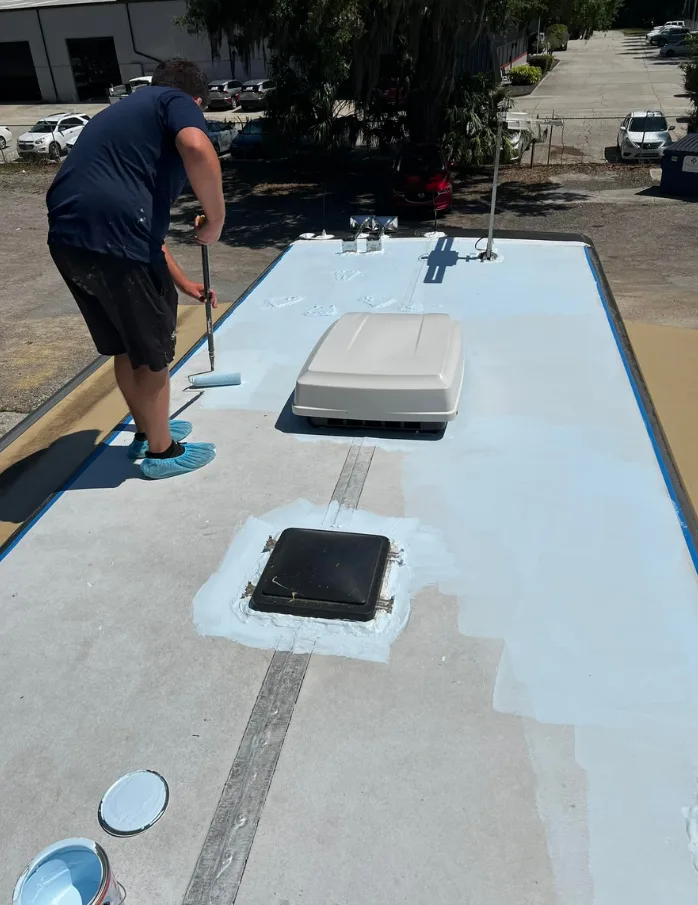
Membrane patching. For tears and punctures, I clean the damaged area thoroughly, apply EPDM-specific primer, and bond a patch of EPDM membrane over the damage. The patch extends at least 2 inches beyond the damaged area in all directions for a proper seal. I use a roller to ensure complete adhesion and eliminate air pockets. A properly applied patch is as durable as the original membrane.
Seam resealing. Failed seams get cleaned of old adhesive residue, primed, and re-bonded with EPDM seam tape. I roll the entire seam with a seam roller at the correct pressure to ensure full contact. After the tape sets, I apply seam sealant (lap sealant) over the edges for additional protection. This is a process that's easy to do poorly and hard to do well, which is why so many DIY seam repairs fail.
Sealant replacement. I remove all old, cracked sealant from around penetrations, clean the area down to the membrane surface, and apply new EPDM-compatible sealant. I use Dicor self-leveling sealant for horizontal surfaces and Dicor non-sag for vertical joints. Using the right product for each application matters, a lot.
UV restoration. For oxidized membranes that are still structurally sound, I clean the entire surface with an EPDM-specific cleaner to remove the chalky residue, then apply a UV protectant treatment. This restores the membrane's flexibility, darkens the surface back toward its original color, and provides a fresh UV protection layer. On a roof that's been neglected for years, this treatment alone can add several years to its useful life.
Using the Right Products Matters
This is something I can't stress enough: EPDM roofs require EPDM-specific products. I've seen dozens of RVs where someone used silicone caulk, household roofing tar, or general-purpose sealant on an EPDM roof. These products either don't bond to EPDM properly or they actually damage the membrane. Petroleum-based products, in particular, will dissolve EPDM rubber on contact.
When I repair your EPDM roof, I use products made specifically for EPDM. Dicor sealants, EPDM primer, EPDM membrane patches, and EPDM seam tape. These products are designed to bond with the specific chemistry of the membrane and provide a lasting repair.
Are you thinking about doing some roof maintenance yourself? That's fine for simple cleaning, but before you put any product on your EPDM roof, make sure it's labeled as EPDM-compatible. If you're not sure, call me at 772-356-0328 and I'll tell you whether the product you're considering is safe to use.
When to Repair vs. Replace Your EPDM Roof
Repair makes sense when the membrane is still flexible and in generally good condition, with isolated problem areas (a torn spot, a failed seam, cracked sealant). Most EPDM roofs can be repaired multiple times over their lifespan.
Replacement makes sense when the membrane is brittle and cracking across large areas, multiple seams have failed, or the roof has widespread bubbling or delamination. At that point, patching individual spots is like putting band-aids on a roof that's past its useful life.
A full EPDM membrane replacement runs $2,000 to $3,000 depending on the size of the roof and the condition of the decking underneath. It's a significant investment, but it gives you a completely fresh roof with 15+ years of protection ahead of it.
When to Call for EPDM Roof Service
If your RV is more than 5 years old and you haven't had the roof inspected in the past year, now is a good time. Catching sealant cracks, seam lifting, and early UV damage while they're still minor keeps repair costs low.
Do you see chalky white residue on your black EPDM roof? That's UV oxidation, and it means the membrane is losing its protective qualities. A cleaning and UV treatment now can prevent cracking later.
If you've already got water stains inside the RV, don't wait. Water damage spreads quickly in Florida's humidity. Call me at 772-356-0328 and let's get the roof inspected and repaired before the damage gets worse.